The Physical Activity Policy Research and Evaluation Network: Evaluation Using CDC’s Science Impact Framework
Stephenie C. Lemon1, Karin Valentine Goins1, Julien Leider2, and Jamie F. Chriqui2,3
1Prevention Research Center at UMass Chan Medical School, Division of Preventive and Behavioral Medicine, UMass Chan Medical School, Worcester, MA, U.S.A.
2Institute for Health Research and Policy, School of Public Health, University of Illinois Chicago, U.S.A.
3Division of Health Policy and Administration, School of Public Health, University of Illinois Chicago, U.S.A.
Abstract
The Division of Nutrition, Physical Activity and Obesity (DNPAO) at the Centers for Disease Control and Prevention (CDC) funded the Physical Activity Policy Research and Evaluation Network (PAPREN) from 2019-2024 to address critical knowledge and translation gaps related to physical activity policy research, with an emphasis on supporting and advancing research and practice on the Guide to Community Preventive Services Task Force’s recommendations to advance physical activity related to community design and parks and green spaces. During the 2019-2024 period, PAPREN grew to include over 1,000 members from sectors such as public health, social and behavioral sciences, transportation, planning, and parks and recreation. PAPREN also included academics, practitioners, and government employees. Using an adapted version of CDC’s Science Impact Framework (SIF), we evaluated PAPREN’s influence on five domains: creating awareness, catalyzing action, disseminating science, effecting change and shaping the future using network tracking activities and a member survey (n=95). Results indicated that PAPREN is having an impact in creating awareness through its communications and presentations infrastructure, catalyzing action through projects and other initiatives led by its topic-focused Work Groups, disseminating science by helping members stay informed about the field and disseminating resources and shaping the future by informing members’ work and shaping the next generation of researchers. An area for growth relates to affecting change by fostering more opportunities for networking and promoting professional development. PAPREN can serve as a model for other collaborative, multi-sectoral networks designed to increase applied research and to use research findings to inform practice.
Keywords: physical activity, built environment, community design
Across the United States and globally, physical inactivity is a prominent risk factor for obesity, common chronic health conditions, infectious diseases and mental health conditions such as depression and anxiety (Warburton & Bredin, 2017; Chastin et al., 2020; Firth et al., 2020). Despite recent progress in increasing physical activity, most Americans do not meet recommended levels of physical activity (Watson et al., 2021; Abildso et al., 2023; Saint-Maurice et al., 2021; Whitfield et al., 2019; Whitfield et al., 2021). Thus, there remains a critical need for public health strategies that increase physical activity.
Research has established that community design can support equitable physical activity by providing opportunities to walk, cycle, roll, and play through access to build environment features such as safe streets and sidewalks as well as trails, greenways, and parks. The Community Preventive Services Task Force (CPSTF) recommends two evidence-based environmental approaches to promote physical activity, (a) built environment strategies that combine new or improved pedestrian, bicycle, or transit transportation systems (i.e., activity-friendly routes) with land use components (i.e., connecting everyday destinations) (Centers for Disease Control and Prevention, 2017) and (b) park, trail, and greenway infrastructure interventions combined with additional interventions, such as structured programs or community awareness (Guide to Community Preventive Services, 2023). Active People, Healthy NationSM, a national initiative led by the Centers for Disease Control and Prevention (CDC) to help 27 million Americans become more physically active by 2027 includes implementation of these CPSTF recommendations among the strategies for increasing physical activity (Fulton et al., 2018).
A broad range of transportation (e.g., bicycle and pedestrian infrastructure) and land use (e.g. mixed use development) interventions, as well as availability of parks and greenspace infrastructure (e.g., trails) can make communities more supportive of physical activity (Young et al., 2020). Achieving these environmental changes typically requires the adoption and implementation of policies (e.g., Complete Streets, zoning reforms). However, the adoption and implementation of such environmental changes and associated policies has been variable. For example, a 2021 national survey of municipalities found that prevalence of 15 activity-supportive policy and community design supports ranged from 20.9% (block size zoning codes) to 86.0% (park maintenance policies) (Webber et al., 2023). There is a need for applied research to further the understanding of effective strategies to support the implementation of policies and associated systems changes required to achieve improvements in the built environment across a range of communities (Young et al., 2020).
Since 2004, CDC’s Division of Nutrition, Physical Activity and Obesity (DNPAO) has supported a thematic network focused specifically on building the scientific evidence base related to physical activity policy in five-year cycles through the Special Interest Project mechanism of the Prevention Research Centers program (www.cdc.gov/prevention-research-centers). The network has served as a virtual convening space, with periodic in-person interaction, for all interested in physical activity policy research and practice and provided opportunities for learning, networking, and collaborative projects. The network structure and focus areas have evolved over time in response to advances in the state of the science and DNPAO priorities (Manteiga et al., 2017;Lemon et al., 2021; Pollack et al., 2016).
The Physical Activity Policy Research and Evaluation Network (PAPREN)
From 2019-2024, DNPAO funded the latest iteration of the network, PAPREN, which added “evaluation” (Lemon et al., 2021). PAPREN is a free network and all who sign up are considered network members. PAPREN seeks to address critical knowledge and translation gaps related to physical activity policy strategies (e.g., Complete Streets). PAPREN is a research affiliate of DNPAO’s Active People, Healthy NationSM initiative, which aims to get 27 million more people active by 2027 by working collaboratively to build active communities through the implementation of evidence-based interventions across multiple sectors and settings. PAPREN specifically prioritizes research focused on community design and physical activity, practice-identified knowledge and implementation gaps, and health equity to address and build on the recommendations of the Community Preventive Services Task Force, (Centers for Disease Control and Prevention, 2017; Guide to Community Preventive Services, 2023). As such, PAPREN emphasized expanding its membership beyond public health and academia to include members from sectors such as transportation, land use planning, and parks and greenspace, among others, and engaging practitioners, advocates and government employees. PAPREN conducts activities designed to grow professional capacity and collaboration among multi-sector researchers and practitioners, build new applied research evidence, and create tools to support translation of research to practice.
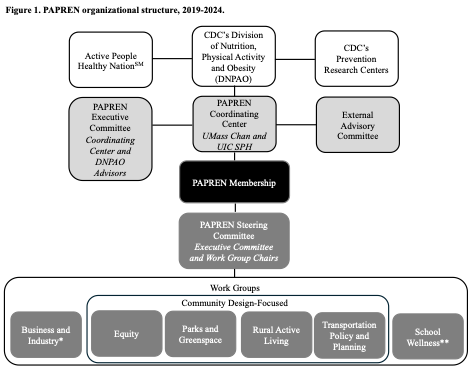
In the 2019-2024 cycle, PAPREN consisted of a Coordinating Center co-located at the University of Massachusetts Chan Medical School and the University of Illinois Chicago School of Public Health (see organizational structure in Figure 1). The Coordinating Center was responsible for the overall strategic direction and day-to-day coordination of PAPREN’s network-wide activities. The Coordinating Center was supported by an Executive Committee comprised of 3 DNPAO scientific advisors and a 5-person External Advisory Committee. The Coordinating Center supported network communications, including a website and monthly newsletter, the PAPREN Post, and network-wide events, including a bi-monthly Grand Rounds speaker series that included scientific and practice-based leaders presenting their cutting-edge work and bi-monthly network meetings that featured brief presentations on methodological advancements and provided opportunities for the Coordinating Center, DNPAO, Active People Healthy Nation partners and other members to showcase events, products, accomplishments and upcoming opportunities.
Over the five-year cycle, PAPREN supported six Work Groups. Work Groups supported PAPREN’s goals by leading small, collaborative research and translational projects that help build the evidence-base. They also provided a convening space for members interested in the Work Group topics and built awareness hosting presentations from practitioners and researchers on relevant initiatives and topics. Four Work Groups focused on community design and physical activity in specific areas. These included: Health Equity, Parks and Greenspace, Rural Active Living, and Transportation Policy and Planning. In addition, PAPREN co-supported a Business and Industry Work Group with the National Physical Activity Plan Business and Industry Sector, and a School Wellness Work Group with PAPREN’s sister network, the Nutrition and Obesity Policy Research and Evaluation Network (NOPREN) (Vasquez et al., 2023). Work Group topics were selected through a combination of DNPAO and member priorities. Work Groups were led by co-chairs along with the Executive Committee, who together comprised the PAPREN Steering Committee. Work Groups were supported by fellows, typically trainees or junior faculty, who supported Work Group logistics and led or participated on projects.
Evaluation of PAPREN is essential to understand the network’s impact, identify gaps and make improvements to better serve the network’s members and the broader field of physical activity policy research and practice. The CDC’s Scientific Impact Framework (SIF) provides guidance on how knowledge generated from scientific findings can be used to influence public health, beyond peer-reviewed publications. SIF includes five inter-related domains of impact (Centers for Disease Control and Prevention): creating awareness, catalyzing action, disseminating science, effecting change, and shaping the future. These domains were adapted to be appropriate for evaluating the impact of the network on its members and the field of physical activity policy and practice more broadly. The purpose of this study is to evaluate impact of the 2019-2024 cycle of PAPREN using an adapted version of the CDC’s SIF (see Table 1).
|
Table 1. PAPREN activities and accomplishments by Science Impact Framework (SIF) domains, 2019-2024. |
||
|
SIF Domain |
Definition |
Activities and Accomplishments |
|
Creating Awareness |
Providing PAPREN members with opportunities to learn about cutting-edge topics, resources and opportunities (e.g., educational, grants) relevant to physical activity policy. |
51 newsletters, open rate range=32%-78% 19 Grand Rounds held, average attendance=94 19 Network meetings held, average attendance=95 138 Work Group speaker presentations |
|
Catalyzing Action |
Conducting projects that address practice-informed research gaps. |
25 projects conducted |
|
Disseminating Science |
Sharing PAPREN-generated research through multiple formats for scientific and non-scientific audiences and keeping members abreast of new scientific findings related to physical activity policy. |
26 manuscripts published or in press 40 presentations 10 research briefs or other products |
|
Effecting Change |
Fostering opportunities for members for networking and professional development. |
N/A |
|
Shaping the Future |
Influencing future directions of the work of PAPREN members and providing opportunities for new investigators. |
19 fellows |
Methods
Evaluation Design
A mixed methods approach was used to evaluate PAPREN for the 2019-2024 cycle. The two methods used included comprehensive tracking of PAPREN activities and a survey of members. This evaluation was determined not to be human subjects research by the UMass Chan Medical School Institutional Review Board.
Tracking
All PAPREN activities were systematically tracked in a database developed and maintained by the PAPREN Coordinating Center team over the five-year funding period. Metrics included membership enrollment, communications, speaker events, projects and products generated from them and PAPREN fellows. Data was routinely entered into the database and reviewed by the Executive Committee for data quality. Total numbers of activities in each category were aggregated across the five-year cycle and classified according to SIF domain using frequency distributions.
Member survey
A web-based annual survey of PAPREN members was conducted between May and August 2024. The survey was conducted online using REDCap (Harris et al., 2019; Harris et al., 2009). An invitation to participate was sent to all individuals on the PAPREN membership list and described the purpose of the evaluation, which was to summarize members’ experiences in the network and to inform future network activities. Reminder emails were sent biweekly for 8 weeks. Results were summarized using descriptive frequency distributions.
All survey items, including those associated with the SIF, were developed by the PAPREN Coordinating Center team members. The survey assessed respondent background characteristics, including professional affiliation, discipline trained in, and number of years participated in the Network. The survey also included questions that aligned with the five SIF domains. The items in the creating awareness domain asked about specific PAPREN activities. For these questions, participants were first asked if they were familiar with (i.e., PAPREN communications) or had ever participated in (i.e., speaker events) the activity. For those who reported yes, a follow-up question asked participants to rate the usefulness (PAPREN communications) or their satisfaction (speaker events) with the activity. The items in the catalyzing action domain asked about participation in PAPREN Work Groups, and for those who participated, their satisfaction with the Work Group. The items in the disseminating science domain asked respondents to rate the extent to which PAPREN helps them stay on top of what’s going on in the field and the extent to which PAPREN disseminates information about new resources in the field. The effecting change domain items asked about the extent to which PAPREN helps them network with colleagues and provides professional development opportunities. The item in the shaping the future domain assessed the extent to which PAPREN informs future directions of work. Ratings for all questions were on a five-point scale with response options ranging from not at all to extremely. The not at all and to a little extent responses were combined because of small cell sizes. Frequency distributions were generated for each item.
Results
PAPREN Membership and Survey Respondent Characteristics
During the 2019-2024 cycle of the network, membership increased from 215 to 1,044 total members, as shown in Figure 2. Of these, 46% worked in academia, 16% in government and 38% in other sectors, as indicated by email domains. Members represent all 50 US states, the District of Columbia, 1 Tribal nation and 17 countries outside of the US.
Figure 2. PAPREN membership growth, 2019-2024 funding cycle.
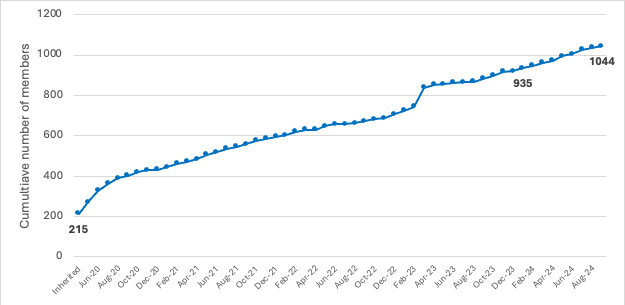
Table 2 presents the characteristics of the survey respondents. Ninety-five individuals fully or partially completed the evaluation survey (~9.1 % response rate). Seventy-seven of the respondents answered the question about the sector that they are employed in and 73 answered the question about their disciplinary training. Of these, 49.4% worked in academia, 23.4% worked in government and the remaining 27.2% in other sectors. The most common disciplines trained in included public health (60.3%), behavioral or social sciences (41.1%) and kinesiology (23.3%). Notably, 19.2% of the respondents were trained in parks, recreation, or leisure studies, planning, or transportation.
|
Table 2. Characteristics of PAPREN members who completed the 2024 evaluation survey (n=95). |
|
|
|
% |
|
Current sector/role (n=77*) |
|
|
Academic |
49.4% |
|
Advocate |
5.2% |
|
Government official or employee |
23.4% |
|
Practitioner, non-government |
7.8% |
|
Student |
7.8% |
|
Other |
6.5% |
|
Field or discipline hold degree (n=73*) |
|
|
Behavioral or social sciences |
41.1% |
|
Kinesiology |
23.3% |
|
Parks, recreation or leisure studies |
11.0% |
|
Planning |
6.8% |
|
Public health, including epidemiology |
60.3% |
|
Transportation |
1.4% |
|
Other |
26.0% |
|
Years involved with PAPREN (and prior network iterations) (n=76*) |
|
|
<1 |
10.5% |
|
1-4 |
57.9% |
|
5-10 |
21.1% |
|
11+ |
10.5% |
*The overall survey sample size was n=95. The number of responses varies for items noted with an * in cases where there was missing data to that particular response option.
Evaluation Results by SIF Domain
Table 1 describes PAPREN activities according to SIF domain, with Table 3 presenting results of the survey by SIF domain. PAPREN activities and survey results are summarized below by SIF domain.
Table 3. PAPREN member survey results by Science Impact Framework domains, 2024 (n=95). |
|
|
|
% |
|
Creating Awareness |
|
|
Familiar with the PAPREN Post newsletter (n=79*) |
|
|
Yes |
86.1% |
|
No |
13.9% |
|
How useful is the PAPREN Post newsletter (among those who were familiar with it and read it) (n=63*) |
|
|
Extremely |
17.5% |
|
Very |
52.4% |
|
Somewhat |
27.0% |
|
A little/Not at all |
3.2% |
|
Ever visited the PAPREN website (n=78*) |
|
|
Yes |
87.2% |
|
No |
12.8% |
|
How useful is the PAPREN website (among those who visited it) (n=65*) |
|
|
Extremely |
16.9% |
|
Very |
44.6% |
|
Somewhat |
27.7% |
|
A little/Not at all |
10.7% |
|
Attended Grand Rounds presentation (n=69*) |
|
|
Yes |
89.9% |
|
No |
10.1% |
|
How satisfied with PAPREN Grand Rounds (among those who definitely attended or were unsure) (n=74*) |
|
|
Extremely |
33.8% |
|
Very |
51.4% |
|
Somewhat |
14.9% |
|
A little/Not at all |
0.0% |
|
Attended PAPREN Network Meeting (n=71*) |
|
|
Yes |
91.5% |
|
No |
8.5% |
|
How satisfied with PAPREN Network Meeting (among those who definitely attended or were unsure) (n=73*) |
|
|
Extremely |
38.4% |
|
Very |
39.7% |
|
Somewhat |
19.2% |
|
A little/Not at all |
2.8% |
|
Catalyzing Action |
|
|
Member of a PAPREN Work Group (n=81*) |
|
|
Yes |
72.8% |
|
No |
27.2% |
|
How satisfied with PAPREN Work Group (among those who were members) (n=58*) |
|
|
Extremely |
46.6% |
|
Very |
37.9% |
|
Somewhat |
13.8% |
|
A little/Not at all |
1.7% |
|
Disseminating Science |
|
|
To what extent does PAPREN help you stay on top of what’s going on in the field of physical activity policy research? (n=94*) |
|
|
Extremely |
37.2% |
|
Very |
43.6% |
|
Somewhat |
13.8% |
|
A little/Not at all |
5.3% |
|
To what extent does PAPREN disseminate information about new resources in the field? |
|
|
Extremely |
37.9% |
|
Very |
42.1% |
|
Somewhat |
14.7% |
|
A little/Not at all |
5.3% |
|
Effecting Change |
|
|
To what extent does PAPREN help you network with colleagues (n=93*) |
|
|
Extremely |
29.0% |
|
Very |
30.1% |
|
Somewhat |
33.3% |
|
A little/Not at all |
7.5% |
|
To what extent does PAPREN provide you with professional development opportunities (n=94*) |
|
|
Extremely |
23.4% |
|
Very |
41.5% |
|
Somewhat |
25.5% |
|
A little/Not at all |
9.6% |
|
Shaping the Future |
|
|
To what extent does PAPREN inform future directions of your work? (n=94*) |
|
|
Extremely |
18.1% |
|
Very |
38.3% |
|
Somewhat |
34.0% |
|
A little/Not at all |
9.6% |
*The overall survey sample size was n=95. The number of responses varies for items noted with an * in cases where there was missing data to that particular response option in addition to any skip patterns note
Creating Awareness
PAPREN produced 51 newsletters and held 176 speaker events during the 2019-2024 cycle. Most survey respondents were familiar with the newsletter (86.1%), had visited the website (87.2%) and had attended a Grand Rounds (89.9%) and Network (91.5%) speaker event. Of those who indicated engagement with/participation in each of these, the majority found the newsletter (69.9%) and website (61.5%) to be extremely or very useful and were extremely or very satisfied with the Grand Rounds (85.2%) and Network (78.1%) speaker events.
Catalyzing Action
The six PAPREN Work Groups led 25 projects. Projects covered topics such as healthy community design, displacement and equity strategies in the US; rural comprehensive planning; equity in physical activity research; recommendations for keeping parks open during the pandemic and active transportation provisions like safe slow streets interventions in municipal COVID orders (Serrano et al., 2023; Charron et al., 2021; John et al., 2023; Slater et al, 2020; Dean et al., 2023). Among survey respondents, 72.8% were members of a Work Group. Of these, 84.5% indicated being extremely or very satisfied with the Work Group.
Disseminating Science
PAPREN projects generated 26 manuscripts, 40 presentations, and 10 practitioner-focused products, with several more that will be finalized in the near future. The products were generated for use by audiences at multiple levels from local to international. Dissemination channels included conference presentations and invited presentations, the PAPREN newsletter and social media, and inclusion in the partner newsletters and communications. The majority of survey respondents reported that PAPREN helps them stay on top of what’s going on in the field (80.8% extremely or very), and that PAPREN disseminates information about new resources in the field (80.0% extremely or very).
Effecting Change
The majority of respondents rated the extent to which PAPREN helps network with colleagues (59.1%) and provides professional development opportunities (64.9%) as extremely or very.
Shaping the Future
The majority of respondents (56.4%) rated as extremely or very the extent to which PAPREN informs future directions of their work.
Discussion
This mixed methods evaluation demonstrates the important role that PAPREN has played in supporting the field of physical activity policy research. PAPREN has accomplished its goals of serving as a convening space, supporting professional capacity building and collaborative opportunities among members that included both practitioners and researchers, and generating new research evidence and associated tools to support translation of research to practice in the physical activity policy and evaluation research and practice field.
PAPREN utilizes the thematic network approach developed by the CDC and its Prevention Research Centers program. Other thematic networks have focused on topics such as cancer prevention and control, nutrition and obesity and epilepsy management, and evaluations have found these networks to be impactful in serving as a convening space and leading important research on their topics of focus (Lemon et al., 2021; Sajatovic et al., 2017; Vasquez et al., 2023; White et al., 2019). While each of these networks differs somewhat in its structure and function, they each bring together a broad array of members and add to their respective fields through innovative research. The results of this evaluation indicate that PAPREN’s approach to the thematic network model is an innovative, effective approach for bringing together individuals from research and practice across multiple sectors who are committed to accomplishing similar goals. Similarly, we found that CDC’s SIF provides a useful framework for network evaluation.
From 2019 to 2024, PAPREN membership increased approximately four-fold. Participation of members who are not academic researchers, from government staff and from disciplines responsible for transportation, land use and parks, trails and greenway infrastructure were priorities for the 2019-2024 funding cycle. Partnering with practice-focused agencies was key to accomplishing this increasing in membership. The PAPREN Executive Committee worked closely with organizational members of DNPAO’s Active People Healthy Nation initiative and other organizations to outreach about PAPREN to their members/audiences. Example outreach methods included informational flyers distributed through their listservs, presentations made to their members, and guest blog posts. The proportion of members from academia decreased from 55.35% at the beginning of the cycle to 49.4% at the end. There was also a notable increase in members representing government (7.44% to 23.4%); ~19% of survey respondents were trained in parks, recreation, or leisure studies, planning, or transportation. A large body of research has demonstrated the critical influence of the built environment, including transportation, land use design and parks and greenspace on physical activity. (Centers for Disease Control and Prevention, 2017; Guide to Community Preventive Services, 2023; Young et al., 2020). As the focus of physical activity policy work shifts to implementation of evidence-based recommendations and best practices, the role of cross-sector partners becomes even more crucial. PAPREN has made notable progress in serving as a convening space across these sectors.
Results of this evaluation indicate that PAPREN has been more successful in making impact in three SIF domains: creating awareness, catalyzing action, and dissemination science. Collectively, these are more proximal impacts and can be mapped more immediately onto PAPREN activities. PAPREN communications and presentations are designed to create awareness of contemporary topics in the field. PAPREN Work Groups are charged with catalyzing action through the conduct of practice-relevant research projects and disseminating findings broadly in multiple formats to potential users and other interest holders, including practitioners, CDC staff and researchers.
The evaluation also identified room for improvement, particularly in the SIF domain of effecting change. We operationalized effecting change as fostering opportunities for members for networking and professional development. PAPREN hosted networking gatherings at the annual Active Live Conference. However, as a national, largely virtual network, and due to the COVID-19 pandemic, facilitating networking opportunities was a challenge. The primary opportunity for professional development offered by PAPREN is through participation in Work Group projects and the development of associated products. This is particularly valuable for members given that Work Group members are not compensated for their participation. However, opportunities for networking are limited given that the Work Groups are unfunded, and we also recognize that participation can be time-intensive and of greater value to academic members. In the next cycle, we will work with PAPREN members to identify feasible yet valuable opportunities for professional development for non-academic members.
Regarding the extent to which PAPREN influences the future direction of members’ work, more than half indicated “extremely or very”, one-third indicated “somewhat”, and less than 10% indicated “a little” or “not at all”. Given that PAPREN seeks to engage members whose work is aligned with the network’s goals, this more modest response is not surprising. In fact, even shaping future directions “somewhat”, presumably by exposing members to the latest evidence and resources and practice-based successes that can inform their work, may be viewed as a positive. PAPREN also supported 19 fellows during the 2019-2024 cycle. They included master’s students, doctoral candidates and post-doctoral fellows, in programs ranging from public health to parks, recreation and tourism management to civil engineering. Fellows typically served one-year terms, and all received a stipend in recognition of their work. In the final years of the cycle, they received travel support to attend the Active Living Conference. Qualitative feedback indicates that the fellows benefited from networking and professional development opportunities provided by their experiences in Work Groups and PAPREN’s support of their attendance at the Active Living Conference.
This evaluation has limitations. The survey response rate was low, and respondents may differ in important ways from non-respondents. In particular, respondents may be more involved in network activities than non-respondents. There was also missing data on individual survey questions. The evaluation also did not capture in-depth information on members’ experiences because of the tracking and survey methods that were used. Additional resources to support qualitative methods that capture in-depth information on members’ experiences and preferences would have enhanced this evaluation. We were similarly unable to systematically track activities that align with the effecting change SIF domain from PAPREN members.
This evaluation assessed how PAPREN has played an important role as a convening space for professionals focused on promoting physical activity through policy-based approaches and cross-sector partners with complementary goals, especially related to community design. We observed that PAPREN has established a cross-sector network and provided opportunities for learning, networking and collaboration. PAPREN has also played an important role in advancing physical activity research, bringing together members from varied perspectives to collaborate on issues grounded in real world practice. Opportunities for growth include further promoting professional development and networking. The next cycle of PAPREN (2024-2029) will build from these results and continue to support the field of physical activity policy, guided by the SIF. Ongoing evaluation of PAPREN will be necessary to continue to demonstrate the network’s effectiveness. PAPREN can serve as a model for other networks designed to increase applied research and to use research findings to inform practice.
Correspondence should be addressed to
Stephenie C. Lemon
Prevention Research Center at UMass Chan Medical School
55 Lake Avenue North
Worcester, MA 01655
 Stephenie C. Lemon: 0000-0003-3321-6070
Karin Valentine Goins: 0000-0003-4736-8235
Julien Leider: 0000-0002-5435-8898
Jamie F. Chriqui: 0000-0003-2538-0276
Funding
This work is a product of the Physical Activity Policy Research and Evaluation Network (PAPREN). PAPREN is supported by Cooperative Agreement Number U48DP006381 from the Centers for Disease Control and Prevention and is a thematic network of the Prevention Research Center network. The findings and conclusions in this presentation are those of the authors and do not necessarily represent the official position of nor an acknowledgement by the Centers for Disease Control and Prevention, the Department of Health and Human Services or the United States government. Access to REDCap was provided through the UIC Center for Clinical and Translational Science (CCTS) UL1TR002003.
Author Contributions
Conceptualization: SCL, KVG, JFC; Data curation: KVG, JL; Formal Analysis: JL, Funding Acquisition: SCL, KVG, JFC; Methodology: SCL, KVG, JFC; Project Administration: KVG; Supervision: SCL, JFC; Writing—Original Draft: SCL, KVG, JFC; Writing—Review and Editing: SCL, KVG, KMR, JM, JFC;
Conflict of Interest Disclosures
The authors have no conflicts to disclose.
Creative Commons License:
This work is licensed under a Creative Commons Attribution-Noncommercial 4.0 International License (CC BY-NC 4.0).
References
Abildso, C. G., Daily, S. M., Umstattd Meyer, M. R., Perry, C. K., & Eyler, A. (2023). Prevalence of meeting aerobic, muscle-strengthening, and combined physical activity guidelines during leisure time among adults, by rural-urban classification and region - United States, 2020. MMWR Morb Mortal Wkly Rep, 72(4), 85-89. https://doi.org/10.15585/mmwr.mm7204a1
Centers for Disease Control and Prevention. Description of the Science Impact Framework https://www.cdc.gov/os/impact/framework.html
Charron, L. M., Milstein, C., Moyers, S. I., Abildso, C. G., & Chriqui, J. F. (2021). Do State Comprehensive Planning Statutes Address Physical Activity?: Implications for Rural Communities. Int J Environ Res Public Health, 18(22). https://doi.org/10.3390/ijerph182212190
Chastin, S., Abaraogu, U., Bourgois, J., Dall, P., Darnborough, J., Duncan, E., Dumortier, J., Jiménez Pavón, D., McParland, J., & Roberts, N. (2020). Physical activity, immune function and risk of community acquired infectious disease in the general population: systematic review and meta-analysis. Immune Function and Risk of Community Acquired Infectious Disease in the General Population: Systematic Review and Meta-Analysis.
Dean, M. D., Amaya, K. A., Hall, J., Gupta, K. M., Panik, R. T., Gustat, J., & Cradock, A. L. (2023). Safe streets for some: A review of local active transportation responses across the U.S. during the COVID-19 pandemic. J Transp Health, 30, 101603. https://doi.org/10.1016/j.jth.2023.101603
Firth, J., Solmi, M., Wootton, R. E., Vancampfort, D., Schuch, F. B., Hoare, E., Gilbody, S., Torous, J., Teasdale, S. B., Jackson, S. E., Smith, L., Eaton, M., Jacka, F. N., Veronese, N., Marx, W., Ashdown-Franks, G., Siskind, D., Sarris, J., Rosenbaum, S.,…Stubbs, B. (2020). A meta-review of "lifestyle psychiatry": the role of exercise, smoking, diet and sleep in the prevention and treatment of mental disorders. World Psychiatry, 19(3), 360-380. https://doi.org/10.1002/wps.20773
Fulton, J. E., Buchner, D. M., Carlson, S. A., Borbely, D., Rose, K. M., O'Connor, A. E., Gunn, J. P., & Petersen, R. (2018). CDC's Active People, Healthy Nation(SM): Creating an Active America, Together. J Phys Act Health, 15(7), 469-473. https://doi.org/10.1123/jpah.2018-0249
Guide to Community Preventive Services (2017). Combined built environment features help communities get active. Retrieved January 12 from https://www.thecommunityguide.org/news/combined-built-environment-features-help-communities-get-active.html
Guide to Community Preventive Services. (2023). Physical activity: Park, trail, and greenway infrastructure interventions when combined with additional interventions. https://www.thecommunityguide.org/news/cpstf-recommends-park-trail-and-greenway-infrastructure-interventions-increase-physical-activity.html
Harris, P. A., Taylor, R., Minor, B. L., Elliott, V., Fernandez, M., O'Neal, L., McLeod, L., Delacqua, G., Delacqua, F., Kirby, J., & Duda, S. N. (2019). The REDCap consortium: Building an international community of software platform partners. J Biomed Inform, 95, 103208. https://doi.org/10.1016/j.jbi.2019.103208
Harris, P. A., Taylor, R., Thielke, R., Payne, J., Gonzalez, N., & Conde, J. G. (2009). Research electronic data capture (REDCap)--a metadata-driven methodology and workflow process for providing translational research informatics support. J Biomed Inform, 42(2), 377-381. https://doi.org/10.1016/j.jbi.2008.08.010
John, D. H., Andress, L., Aytur, S., Dodge, T., Gustat, J., Schuchardt-Vogt, C. E., & Lee, R. E. (2023). Scoping Conceptions of Equity: Reviewing a Decade of Physical Activity Research. J Healthy Eat Act Living, 3(1), 7-18.
Lemon, S. C., Goins, K. V., Ussery, E. N., Rose, K. M., & Chriqui, J. F. (2021). Building evidence, building community: The Physical Activity Policy Research and Evaluation Network (PAPREN). J Healthy Eat Act Living, 1(4), 177-180.
Manteiga, A. M., Eyler, A. A., Valko, C., Brownson, R. C., Evenson, K. R., & Schmid, T. (2017). The impact of the Physical Activity Policy Research Network. Am J Prev Med, 52(3 Suppl 3), S224-s227. https://doi.org/10.1016/j.amepre.2016.10.018
Pollack, K. M., Schmid, T. L., Wilson, A. L., & Schulman, E. (2016). Advancing translation and dissemination research and practice through the Physical Activity Policy Research Network Plus. Environ Behav, 48(1), 266-272. https://doi.org/10.1177/0013916515616990
Saint-Maurice, P. F., Berrigan, D., Whitfield, G. P., Watson, K. B., Patel, S., Loftfield, E., Sampson, J. N., Fulton, J. E., & Matthews, C. E. (2021). Amount, type, and timing of domain-specific moderate to vigorous physical activity among US Adults. J Phys Act Health, 18(S1), S114-s122. https://doi.org/10.1123/jpah.2021-0174
Sajatovic, M., Jobst, B. C., Shegog, R., Bamps, Y. A., Begley, C. E., Fraser, R. T., Johnson, E. K., Pandey, D. K., Quarells, R. C., Scal, P., Spruill, T. M., Thompson, N. J., & Kobau, R. (2017). The Managing Epilepsy Well Network:: Advancing Epilepsy Self-Management. Am J Prev Med, 52(3 Suppl 3), S241-s245. https://doi.org/10.1016/j.amepre.2016.07.026
Serrano, N., Realmuto, L., Graff, K. A., Hirsch, J. A., Andress, L., Sami, M., Rose, K., Smith, A., Irani, K., McMahon, J., & Devlin, H. M. (2023). Healthy community design, anti-displacement, and equity strategies in the USA: A scoping review. J Urban Health, 100(1), 151-180. https://doi.org/10.1007/s11524-022-00698-4
Vasquez, T., Levi, R., Akers, M., Lowry-Warnock, A., Blanck, H. M., & Seligman, H. (2023). The value of the Nutrition and Obesity Policy Research and Evaluation Network in advancing the evidence base for effective nutrition and obesity policy: assessment using the Consolidated Framework for Collaborative Research. BMC Public Health, 23(1), 375. https://doi.org/10.1186/s12889-023-15148-2
Warburton, D. E. R., & Bredin, S. S. D. (2017). Health benefits of physical activity: a systematic review of current systematic reviews. Curr Opin Cardiol, 32(5), 541-556. https://doi.org/10.1097/hco.0000000000000437
Watson, K. B., Whitfield, G., Chen, T. J., Hyde, E. T., & Omura, J. D. (2021). Trends in Aerobic and Muscle-Strengthening Physical Activity by Race/Ethnicity Across Income Levels Among US Adults, 1998-2018. J Phys Act Health, 18(S1), S45-s52. https://doi.org/10.1123/jpah.2021-0260
Webber, B. J., Whitfield, G. P., Moore, L. V., Stowe, E., Omura, J. D., Pejavara, A., Galuska, D. A., & Fulton, J. E. (2023). Physical Activity-Friendly Policies and Community Design Features in the US, 2014 and 2021. Prev Chronic Dis, 20, E72. https://doi.org/10.5888/pcd20.220397
White, A., Sabatino, S. A., Vinson, C., Chambers, D., & White, M. C. (2019). The Cancer Prevention and Control Research Network (CPCRN): Advancing public health and implementation science. Prev Med, 129s, 105824. https://doi.org/10.1016/j.ypmed.2019.105824
Whitfield, G. P., Carlson, S. A., Ussery, E. N., Fulton, J. E., Galuska, D. A., & Petersen, R. (2019). Trends in meeting physical activity guidelines among urban and rural dwelling adults - United States, 2008-2017. MMWR Morb Mortal Wkly Rep, 68(23), 513-518. https://doi.org/10.15585/mmwr.mm6823a1
Whitfield, G. P., Hyde, E. T., & Carlson, S. A. (2021). Participation in leisure-time aerobic physical activity among adults, National Health Interview Survey, 1998-2018. J Phys Act Health, 18(S1), S25-s36. https://doi.org/10.1123/jpah.2021-0014
Young, D. R., Cradock, A. L., Eyler, A. A., Fenton, M., Pedroso, M., Sallis, J. F., & Whitsel, L. P. (2020). Creating Built Environments That Expand Active Transportation and Active Living Across the United States: A Policy Statement From the American Heart Association. Circulation, 142(11), e167-e183. https://doi.org/10.1161/cir.0000000000000878