Housing
Influences on Active Aging: Perspectives from African Immigrant Elders in
Chicago's South Side
Omotayo.
A. Onanuga1, Gina. M. Besenyi3, Migette L. Kaup2,
Zhan Chen1, and Todd R. Gabbard1
1Department of Architecture, College
of Architecture, Planning and Design, Kansas State University, U.S.A.
2Department of Industrial Design,
College of Architecture, Planning and Design, Kansas State University, U.S.A.
3Department of Kinesiology, College
of Health and Human Science, Kansas State University, U.S.A.
Abstract
The quality of housing and the surrounding
environment have been shown to have a significant impact on the health and
well-being of older adults. This is especially relevant for immigrant
populations, where poor housing conditions can lead to mobility limitations,
social isolation, and stress, which contribute to unhealthy lifestyle choices
and declining health. While active aging has been proposed as a promising
approach to enhance health outcomes among the general population, its relevance
for immigrants who often reside in suboptimal urban housing environments
remains largely unexplored. This study aims to investigate the factors in urban
housing environments that contribute to inactiveness among African immigrant
older adults in the United States, with the goal of identifying potential areas
for promoting active aging through targeted interventions in the built
environment. Employing grounded theory qualitative methodology, this study
collected interview data from 30 older adult African immigrants (55+) in
diverse housing environments in Chicago's south side. Photographs of the
environment were included solely as a visual method, serving as a valuable and
context-rich form of qualitative data. Given that most interviews were
conducted outside participants’ residences, these images provided important
contextual insight into the environments being described. Interview recordings
were transcribed using NVivo software, cross-checked, and manually
corrected for linguistic nuances or occasional native language use before
coding. The photographs were analyzed thematically, with attention to
environmental cues that supported and enriched the interview data. Four main
themes were identified: participants’ cultural perceptions, housing barriers to
indoor physical activity, neighborhood factors, and social dimension of active
aging. Understanding the relationship between housing environments and active
aging is crucial for designing effective interventions to enhance lifestyle of aging
African diaspora immigrants in the United States. However, obtaining
population-specific data is essential to tailor these interventions to the
unique needs of individuals within their specific housing environments.
Keywords: African, Active Aging,
Housing environment, Immigrant, Older Adult.
Urban housing in the United States is crucial for the older
adults’ well-being, with factors like accessibility, safety, and social
cohesion directly influencing their physical and mental health (Oswald et al.,
2007). As individuals age, their reliance on the home environment grows, with
increased time spent at home necessitating supportive surroundings (Wahl et
al., 2009). Older African immigrants, one of the fastest-growing foreign-born
groups in the U.S., face distinct housing challenges while contributing to the
rising population of seniors (American Community Survey Briefs, 2023).
While many marginalized groups face systemic racism, housing
discrimination, and economic inequities, immigrant communities often encounter
additional challenges such as cultural adaptation, language barriers, and
navigating unfamiliar systems (Obeng-Odom, 2012; Sadarangani & Jun, 2015). For
African immigrants, the intersecting factors such as race, migration,
socioeconomic status, and the new housing environments characteristic that is
different from what they are used to create obstacles to their active living
(Blanas et al., 2013; Turk et al., 2015). This highlights a pressing need for
focused research, especially among their older population.
A key issue is the aggregation of diverse Black populations
in health data. Cultural values, health beliefs, and lived experiences shape
older African immigrants’ health perceptions, guiding their healthcare
practices, diets, and preventive care attitudes—often differing from mainstream
U.S. norms (Boise et al., 2013; Commodore-Mensah et al., 2018). Black aggregate
health data has led to inadequate health interventions, misinterpretation of
health trends, and a lack of effective resources tailored toward active aging
of African immigrant and other aggregated races (Sewali et al., 2015).
Active aging, defines as optimizing health, social participation,
and security in later life, is strongly influenced by urban housing environments
(WHO, 2002). Supportive housing environments foster active aging through access
to social networks, community resources, and physical activity opportunities
(Chaudhury et al., 2012; Jumadi et al., 2019). For older immigrants, active
aging mitigates social isolation, enhances mental health, and improves overall
well-being (Rowe and Kahn, 1997). Promoting active aging through supportive
housing directly improves immigrants’ physical and mental health. Addressing
housing inequalities and developing age-friendly communities can elevate this
population’s health and quality of life.
Some of the barriers to active aging associated with the
housing environment include unsafe neighborhoods, fear of crime, costly
programs, and limited access to physical activity spaces (Belza et al., 2004;
Van Duyn et al., 2007). Physical environmental barriers, such as scarce
community centers, poor transportation, and unsafe walkways, also hinder active
living (Begun et al., 2018; Oswald et al., 2003). Many housing interventions rely
on designers’ expertise and programmatic strategies to address activity
barriers (Chaudhury et al., 2012). However, these efforts often overlook the
lived experiences and needs of residents, particularly those from diverse
backgrounds.
To design housing environments that combat inactivity and
its root causes, understanding residents’ firsthand experiences is critical. This
study contributes to a broader initiative to retrofit housing environments for
older African immigrants’ active living needs in the U.S. This study examines
how housing environments shape the lifestyles of aging African immigrants in
Chicago’s South Side. By centering older African immigrants lived experiences,
this study uncovers barriers to maintaining active lifestyles in their housing.
Using qualitative in-depth interviews, the study collects detailed data on
participants’ daily routines, activity habits, and housing perceptions. This
data will identify key factors affecting their physical activity engagement.
The findings advance research on U.S. immigrant health,
especially among older African populations. By understanding the challenges
faced by this population, researchers and policymakers can develop more
targeted and effective interventions to promote active living and improve
overall health outcomes. Furthermore, the insights gained from this study can
inform the design of housing environments that are increasingly responsive to
the needs and preferences of diverse communities, ultimately promoting greater
health equity and social justice.
Methodology
Research design and
theoretical framework
This study
employed a qualitative research design to explore the lived experiences of
participants and the influence of their immediate environment. A qualitative
approach was appropriate given the study’s aim to understand subjective
experiences, contextual realities, and environmental conditions through the
lens of those directly affected.
The study focused
on Chicago’s South Side, a region historically shaped by racially
discriminatory housing policies that concentrated marginalized populations in
under-resourced neighborhoods (Moore, 2016; Smith, 2012). We employed grounded
theory to explore their active aging experiences, a method selected for its
utility in generating insights from understudied phenomena (Glaser &
Strauss, 2017). Cultural backgrounds, national origins, and residency duration are
acknowledged as potential influences on participants’ perspectives.
Participant
recruitment and sampling
Recruitment began
with emails to 40 individuals provided by the United African Organization
(UAO), yielding six responses. The low response rate stemmed from UAO’s
non-participation policy (citing concerns about participants’ sensitive
immigration status) and participants’ unfamiliarity with the research team. To
diversify recruitment, we employed purposive and snowball sampling via
religious leaders and community events, resulting in 24 additional
participants. The final sample comprised 30 older African immigrants. The
latter recruitment strategy has also been used in studies targeting similar
participants (Ellard-Gray et al., 2015; Ogungbe et al., 2021).
Participants
included older African immigrants who are from aged 55 and above. The average
life expectancy across African continent was estimated at 61.46 years, with a
low dispersion of 13.75 years (Djoumessi, 2022). By focusing on individuals
aged 55 and above, we captured the experiences of those who have surpassed the
average life expectancy and are in the later stages of life.
Data
Collection
Before data
collection, the study protocols were approved by the Kansas State University
Institutional Review Board ensuring adherence to ethical standards and
guidelines for research involving human participants. Following this approval,
we collected data between May and August 2023.
In-depth,
semi-structured interviews served as the primary method of data collection. The
interview guide was developed using the World Health Organization’s eight
domains of age-friendly communities to explore participants' perceptions of
their built environment, barriers to physical activity, and cultural influences
on aging (WHO, 2007; Prieto-Flores et al., 2021). The age-friendly domains
included outdoor spaces and buildings, transportation, housing, social
participation, respect and social inclusion, civic participation and
employment, communication and information, and community support and health
services. Pre-interview questionnaire collected demographic data (age, gender,
employment, years in the U.S.) to contextualize their experiences.
To complement and
contextualize the interview data, photographs of participants’ physical
environments were collected. These images captured key aspects of the built and
surrounding environment, such as housing conditions, neighborhood layout, and safety
features. The visual data helped to illuminate how environmental factors
potentially shaped participants' behaviors and experiences. These photographs
were analyzed alongside the interview data to identify thematic consistencies
and contrasts.
The lead author,
familiar with the study population, conducted all interviews. Interview
questions were collaboratively designed by the research team to ensure rigor.
The interviews with participants recruited through religious organizations were
conducted in person at their facilities, whereas the six participants from
personal referrals were interviewed in their homes. Prior to the interviews, participants
were informed that the interview would last approximately 60-90 minutes and
offered no financial compensation. Each interview began with a briefing to
explain the interview procedure, the study's scope and objectives, and
participants' autonomy throughout the process. Participants were informed of
their right to withdraw from the study at any time without consequence. They
were also assured that their responses would remain confidential and used
solely for research purposes. Signed consent was obtained before data
collection, and participants were given the opportunity to ask questions about
the study.
Interviews were
audio-recorded, supplemented by visual data (Google Earth images, photographs,
and field sketches) documenting residential environments. These visuals were
analyzed for walkability, green space access, and safety, then cross-referenced
with interview narratives to validate findings.
Data
Analysis
Both interview
transcripts and environmental photographs were subjected to thematic analysis.
Transcripts were coded inductively to allow themes to emerge naturally from
participants’ narratives. Visual data were analyzed through interpretive visual
analysis, with attention to environmental features mentioned by participants
and those observed independently. Triangulating textual and visual data
enhanced the credibility and depth of the findings.
The transcription
of interviews was processed in NVivo software and manually corrected for
accents/native language nuances. Coding followed Braun and Clarke’s (2006) thematic
analysis, a method widely used in similar qualitative studies (e.g. Johnson
& Brown, 2020). The initial coding results in 75 codes identified from
common keywords and phrases. These were further consolidated to 33 themes. Afterwards,
we applied pattern coding to finalize four overarching themes.
The lead author
conducted the coding independently, given his proficiency in the language of
the study population. This single-coder approach posed a limitation; however,
other authors participated in the review of these themes to ensure their
consistency with the coded extracts (level 1), and alignment with the broader
dataset (level 2). Also, all authors scrutinize thoroughly the rationale behind
the coding decisions and the thematic placements. Likewise, field notes and
visual sketches created during interviews supplemented coding accuracy. The
final stage involved defining, naming, and contextualizing themes within the
study’s research questions and objectives.
Results
Participants
represented five African countries: Nigeria (50%), Ghana (17%), Tanzania (13%),
South Africa (13%), and Senegal (7%). All participants have lived in the U.S. for
a minimum of five years post-migration, with approximately 73% having resided
in the country for over 10 years. Common themes emerged across groups, however,
their cultural and structural differences shaped individual experiences. The
average duration of interviews was 75.03 minutes (SD = 7.58). Table 1 shows the
demographic characteristics of the participants studied. As shown in the table,
the 30 participants comprising 60% female, aged between 55-82 years, have
varying work schedules and residential status. Those between age 50-69
constitute 27% of the study population, engaged in daily double shifts of 16
hours, with just one full day in the week as time off and work only the night
shifts every other weekend. They primarily resided in rented apartments. The
60-69 age group, accounting for 43% of the participants, also has similar time
off, with only a quarter of the 60-69 age group owning their homes. Both age
groups allocated their monthly income to essential bills (including housing,
food, and car loans), family support, and personal needs. Homeowners in the
60-69 age group had the additional financial responsibility of a housing
mortgage. The 70+ age group, representing 30% of the participants, had
different work arrangements and financial priorities. Those in the 70-79 age
group worked single shifts of 8-10 hours, either during the day or overnight,
with more days off. Half of this group owned their homes. The 80+ age group
consisted of retirees who owned their homes. Both the 70-79 and 80+ age groups
allocated a significant portion of their monthly income to supporting their
children or grandchildren and paying off debts, including mortgages. Overall,
Participants reported long work hours as a major constraint to physical
activity. However, no direct measures of physical activity levels were
collected. Our future research will quantify sedentary behavior among the
population studied to further explore this connection. Participants
reported employment in various sectors, including health services (e.g.,
nursing, certified nursing assistant roles), personal business ventures,
factory work, and security services.
Table 1: Showing
the demographic characteristics of the participants
|
Demographics
|
|
Number
|
(%)
|
Residential
status (%)
|
|
|
|
|
|
|
Renter
|
Homeowners
|
Expenditure
|
|
Age class
|
50-59
|
8
|
26.7
|
27.0
|
-
|
Bills, family,
loan
|
|
|
60-69
|
13
|
43.3
|
33.0
|
10.0
|
|
|
70-79
|
6
|
20.0
|
13.0
|
7.0
|
Mostly family
|
|
|
80-89
|
3
|
10.0
|
-
|
10.0
|
|
Sex
|
Male
|
12
|
40.0
|
|
|
|
|
|
Female
|
18
|
60.0
|
|
|
|
|
Employment status
|
Actively working
|
27
|
90.0
|
|
|
|
|
|
Retired
|
3
|
10.0
|
|
|
|
|
Work schedule
|
16 hours/day
|
21
|
70.0
|
|
|
|
|
<16
hours
|
6
|
20.0
|
|
|
|
|
Resident status
|
Renter
|
22
|
73.0
|
|
|
|
|
Homeowner
|
8
|
27.0
|
|
|
|
|
Years of stay
|
5-10 years
|
8
|
26.7
|
|
|
|
|
|
over
10 years
|
22
|
73.3
|
|
|
|
The four key
themes that emerged to explain the impact of participants' housing on active
aging are cultural perception, residential environmental, neighborhood physical
and social environmental factors.
Cultural perception
To better understand the participants' active lifestyles, we assessed
the activities outside of their regular work routines. With the exception of
those over 80 years old, participants mentioned that the activities they engage
in include house chores such as cleaning, laundering, and meal planning and
preparation. To the participants these household activities hold cultural importance,
and they are also perceived to be adequate as a way of staying physically
active. Table 2 shows the number of participants with these views under each
age category.
Table 2: Participants’
active behaviors in their residences.
|
Active
behavior in the house
Total
population under each age category
|
Number
of mentions by age group
|
|
50-59
8
|
60-69
13
|
70-79
6
|
>80
3
|
|
Sweep
the house and surroundings.
|
8
|
13
|
5
|
1
|
|
Doing
laundering.
|
8
|
13
|
5
|
1
|
|
Arranging
and stacking stuff
|
8
|
8
|
4
|
1
|
|
Cooking
varieties of food & stored in the fridge
|
8
|
13
|
5
|
1
|
|
Watch
television series & religious events.
|
4
|
8
|
5
|
3
|
|
Taking
time to rest to rejuvenate
|
4
|
7
|
6
|
3
|
The participants
explained that cleaning is not just about tidiness but part of their upbringing.
One participant remarked, "I grew up with the habit of sweeping and
mopping; it's something I learned from my parents." Laundering was
another task mentioned by the participants on their days off. Some participants
even handwash their clothes saying that it “evokes memories of home and
cherished moments with loved ones.” Some mentioned that they have clothing
specific to their culture and using washing machines could damage the fabrics
or the design on them. One participant explained, "While the washing
machine makes the work easier, it’s not suitable for our fabrics. It might tear
or bleach the design, and the stones on my clothes could come off. If I
handwash, I can take better care of these aspects." Several
participants believe that combining their traditional hand-washing methods with
modern washing equipment yields the most satisfactory level of cleanliness for
their linens. A participant shared: “how can washing machine do a good job
in washing some specific areas of the linen such as armpits, collars and so on?
I manually wash those areas of my linen and my underwear in a bucket in the
bathroom, then turn everything inside the washing machine for spinning and
drying. That is enough exercise for a day.”
The preference for
cooking their food rather than eating out was a common sentiment among
participants. However, a few individuals under 60 noted that their work
schedules sometimes made it difficult to find time to cook, though they prefer
home-cooked meals. Reflecting this, one participant explained: “I usually
cook my own meals and hardly eat out because I prefer food made the way we do
it back home. Since I only get one day off, I cook in large quantities, so the
food lasts until my next day off. Older participants, such as men in their
seventies and women in their eighties, who lacked the strength to cook, sought
assistance but closely guided their helpers to ensure meals were prepared to
their preferences. One participant shared: “I hire someone to do my cooking
because I don’t have strength to stand for long. However, even in this
situation, I join them in the kitchen making sure they cook the food the way I
wanted them to do it.”
The activity
mentioned among the participants in their eighties was prioritizing rest,
following doctors' advice for essential physical and mental rejuvenation. Their
resting periods often involved leisurely naps, watching television, tuning into
prayer lines on social media, or talking by phone with family members back
home. Likewise, those below the age of seventy mentioned that they seek
opportunities to hang out with friends when they can and engage in outdoor
activities like sightseeing and boat rides when their families visit.
Overall, participants
expressed a preference for continuous activities rooted in their cultural
upbringing and childhood training, which have become integral to their
lifestyle. They perceived these activities as rigorous physical exercise due to
the level of active body movement involved. Reflecting this perspective, one
participant explained: “sweeping involves bending and moving around, making
it a way to stay active. By the time I am done cleaning, shower and eat, the
next thing is to go to bed and rest because I would have been so tired. What
exercise is more than that?” Overall, the participants generally believe
physical activity is already integral in their lifestyle, being embedded in the
activities contained in their cultural norms and values.
Table 3: Codebook of Themes:
Cultural Perception of Domestic Activities as Physical Activity
|
Theme
|
Description
|
Illustrative
Quotes
|
|
1.
Culturally Embedded Household Activities
|
Participants
identified culturally rooted domestic chores (sweeping, laundering, cooking)
as essential forms of physical activity and personal identity.
|
“I
grew up with the habit of sweeping and mopping; it’s something I learned from
my parents.”
“Sweeping
involves bending and moving around… What exercise is more than that?”
|
|
2.
Traditional Approaches to Laundering
|
Handwashing
clothes was described as culturally meaningful and necessary for fabric care,
with many combining it with machine use for efficiency.
|
“If
I handwash, I can take better care of these aspects.”
“I
manually wash… then turn everything inside the washing machine for spinning
and drying.”
|
|
3.
Cooking as a Preferred and Active Practice
|
Cooking
meals at home was seen as both a health and cultural necessity. Even
participants unable to cook directly remained involved in food preparation.
|
“I
cook in large quantities… so the food lasts until my next day off.”
“I
join them in the kitchen… making sure they cook the food the way I wanted.”
|
|
4.
Rest as a Functional and Age-Adaptive Activity
|
Participants
over 80 emphasized rest and leisure as health-preserving routines aligned
with age and medical advice.
|
“I
don’t have strength to stand for long.”
“Doctors
say I need to rest to avoid stress on my heart and joints.”
|
|
5.
Social and Leisure Engagement
|
Younger
participants occasionally engage in informal social and recreational
activities like sightseeing or gatherings, especially when family visits.
|
“I
hang out with friends when I can.”
“We
go on boat rides when my children come around.”
|
|
6.
Perception of Everyday Tasks as Exercise
|
Participants
widely viewed daily domestic routines as equivalent to structured physical
exercise due to the energy exerted.
|
“By
the time I am done cleaning… the next thing is to go to bed and rest because
I would have been so tired.”
|
Housing Barriers to
Indoor Physical Activity
Participants studied were either living in rented or owned
residences. Anxiety
over structural soundness, layout efficiency, adequate lighting, and
ventilation stood out as factors mentioned by the participant as challenges to
active aging, irrespective of the type of residents. Both renters and owners among the participants express
similar anxieties regarding the structural soundness of their resident
flooring. Common among the concern shared was the comment on “hearing
different cracking sounds when I walk in my apartments,” which led some to
think that the “floor is not strong enough for anything beyond careful
walking” and might not support indoor exercises. This apprehension leads to
a reluctance to perform activity beyond commuting from one space to another in
their residential interior. "Houses here are not designed for you to
engage in too rigorous activity than sleeping," one participant
remarked.
In addition, participant living in rented housing also
mentioned the challenge of insufficient indoor spaces. The limited space within
their apartments restricts free movement, making even routine activities such
as house cleaning challenging. One participant shared, "The rooms are
not of the same sizes; whoever enters last takes the small room. My room is
smaller and cramped." Also, the shared nature of common spaces further
complicates the situation. As one participant explained, "We share the
space, so nobody can dominate any shared space unless the use is mutual. So, I
can only maximize my bedroom, and it is packed at the moment with my belongings."
Similarly, participants in the rented residences identified
poor natural lighting and ventilation as significant challenges in their indoor
spaces. One participant remarked: "Most shared spaces in the interior
often rely solely on artificial lighting, as they lack exterior-facing windows.
Sometimes I feel the lighting is not enough." Additionally,
participants reported reduced physical activity as a strategy to manage the
cost of artificial lighting and ventilation, such as air conditioning. This is
because utilizing the artificial system poses a financial challenge. As one
participant shared, "You have to rely on AC to cool the room, but when
the bill comes, you will rethink putting it on all the time." Also,
another participant explained: "I sweat a lot engaging in rigorous
activity indoors, and it is not advisable cost-wise to run air-conditioning
more often." Consequently, inadequate natural lighting and
ventilation, coupled with the financial burden of artificial systems,
significantly hinder indoor physical activity among participants in rented
residences.
Table 4: Codebook of Themes: Housing
Barriers to Indoor Physical Activity
|
Theme
|
Description
|
Illustrative
Quotes
|
|
1.
Structural Insecurity and Indoor Inactivity
|
Participants
expressed anxiety about the structural integrity of their homes, particularly
flooring. This fear limited physical movement and discouraged indoor physical
activity.
|
“Hearing
different cracking sounds when I walk in my apartment.”
“The
floor is not strong enough for anything beyond careful walking.”
“Houses
here are not designed for you to engage in too rigorous activity than
sleeping.”
|
|
2.
Spatial Constraints in Rented Residences
|
Limited
indoor space, particularly in rented housing, restricted movement and made
everyday tasks like cleaning physically demanding. Shared living arrangements
compounded these constraints.
|
“The
rooms are not of the same sizes… My room is smaller and cramped.”
“We
share the space… I can only maximize my bedroom, and it is packed.”
|
|
3.
Poor Lighting and Ventilation
|
Participants
in rented housing described challenges related to lack of natural lighting
and poor airflow, which contributed to discomfort and discouraged physical
activity.
|
“Most
shared spaces… rely solely on artificial lighting.”
“Sometimes
I feel the lighting is not enough.”
|
|
4.
Financial Burden of Indoor Climate Control
|
The
cost of using artificial lighting and ventilation systems such as air
conditioning discouraged participants from engaging in physically demanding
indoor activities.
|
“You
have to rely on AC… but when the bill comes, you rethink putting it on.”
“It
is not advisable cost-wise to run air-conditioning more often.”
|
|
5.
Home Environment as a Barrier to Active Aging
|
The
combination of physical, structural, and financial constraints created an
indoor environment that discourages active living, especially among renters.
|
“I
sweat a lot engaging in rigorous activity indoors…”
“Promoting
active aging may require focusing on opportunities outside the residential
environment.”
|
This finding suggests that the condition of residential
indoor spaces limits physical activity among participants, especially the
renters. As a result, promoting active aging among immigrant renters may
require focusing on opportunities for physical activity outside the residential
environment.
The neighborhood
factors
Participants
living in rented housing typically reside in multi-story or mixed-use
buildings, usually four floors high. These buildings were located along major
roads that connect different areas of the neighborhood. These areas are busy,
with buildings positioned close to the road, leaving minimal space between the
road, sidewalk, and building fronts (see Figure 1). In contrast, participants
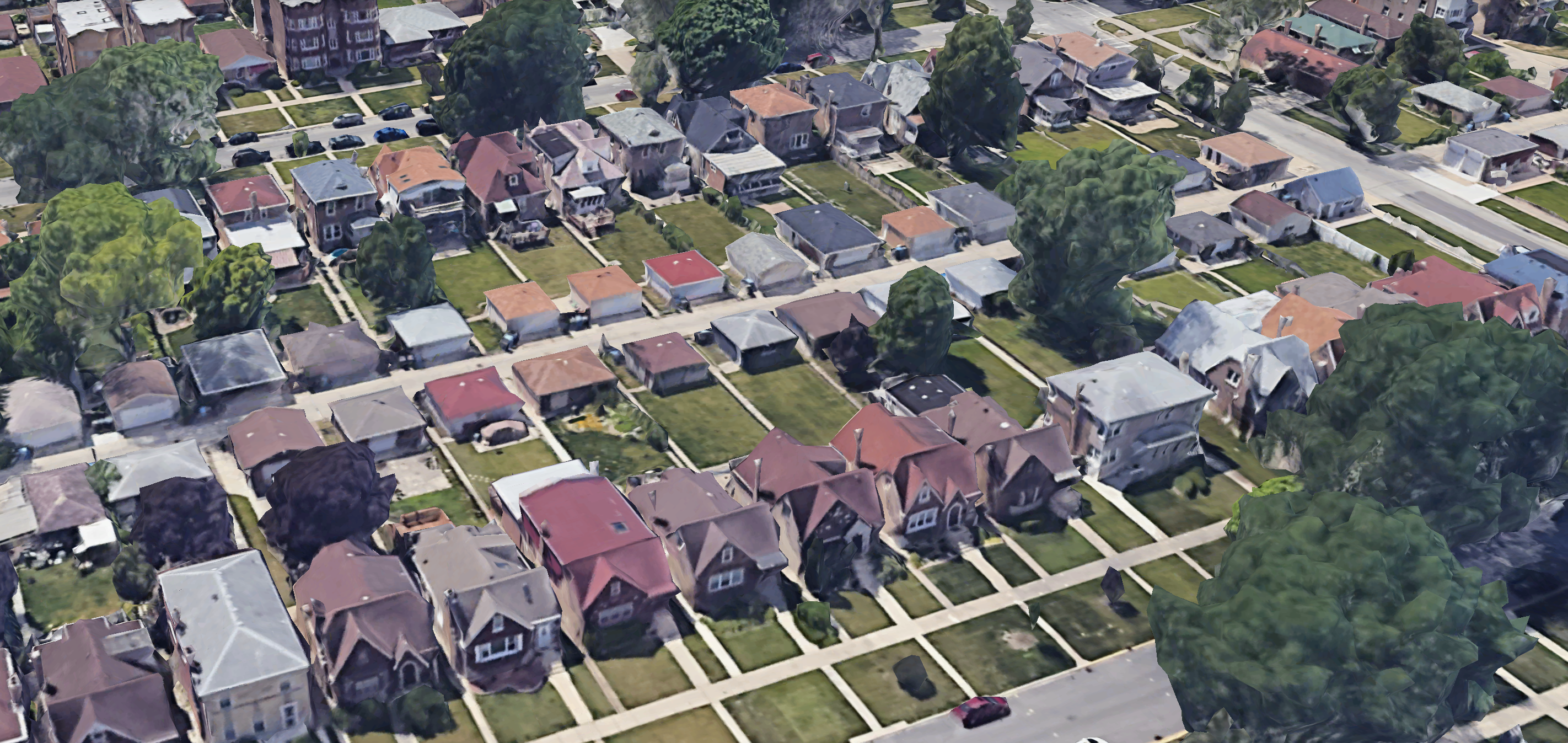
in owned homes primarily live in single-story residences in quieter, suburban
parts of the neighborhood. These areas feature less traffic, with houses set
back significantly from the road, creating separation through expansive lawns,
gardens, or buffer zones. This environment offers greater privacy and
tranquility compared to the bustling settings of rented housing, with fewer
nearby commercial or public buildings (see Figure 2).
Figure 1: A picture
showing a typical multi-floor rented apartments in the studied neighborhood.
Source: Google Earth (https://earth.google.com/web)
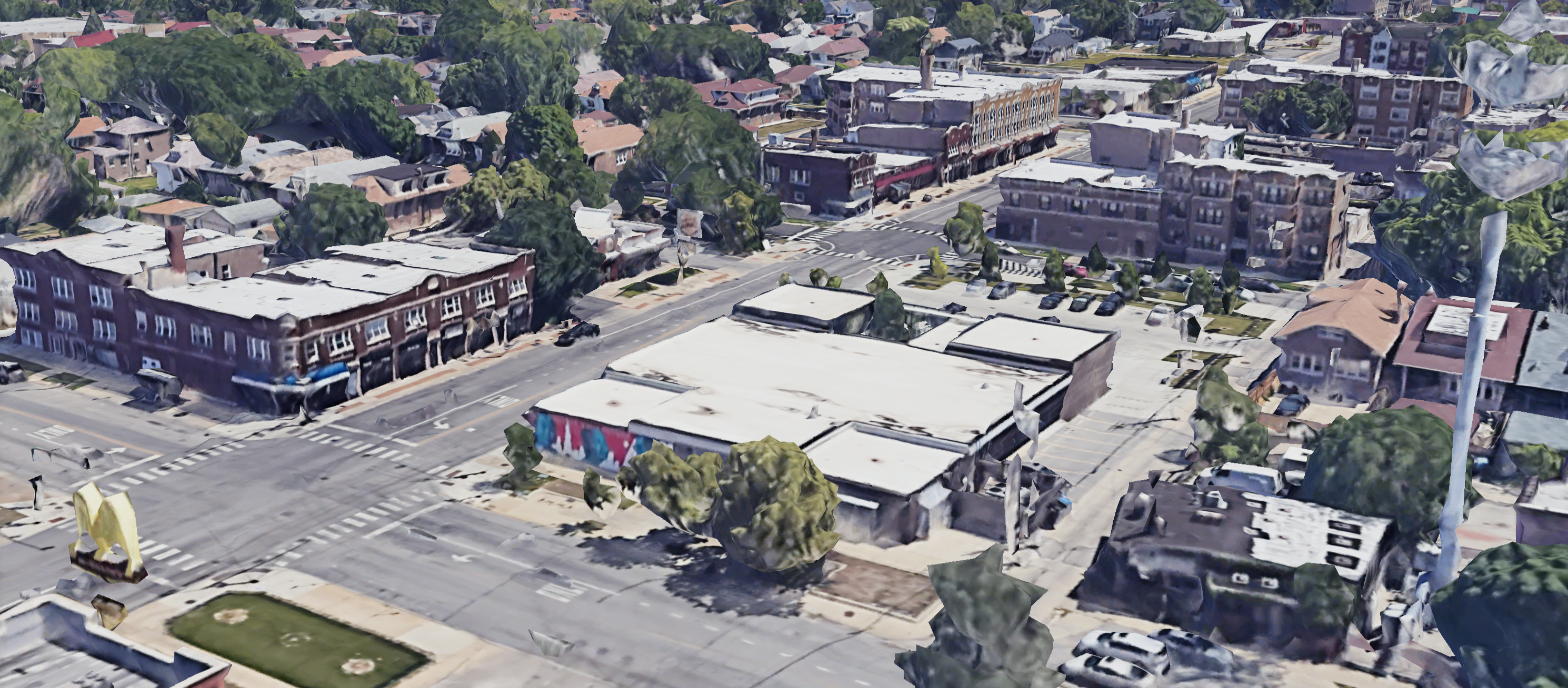
Figure 2: An aerial
view of single-family house type on S. Prairie & S. Indiana Avenue in the
studied neighborhood
Source: Google Earth (https://earth.google.com/web)
The participants were
asked about their neighborhood walkability, whether for leisure or
transportation. Participants living in rented housing mentioned that neighborhood
is not safe for walking. Capturing the general concern of the participants, one
mentioned: "Walking is too risky in this neighborhood. There is too
much reckless driving here and the pavement where people walk is too small for people,
and too close to the road. Roads connect everywhere here, even to your
doorstep, so one has to be very careful." Additionally, participants noted
the condition and maintenance status of the walkways increasing the risk of
falls. “People just drink and throw the bottle anywhere. The road itself can
make you fall if you don’t walk carefully. Everything is spoiled. I cannot walk
and end up in the hospital with how costly medication is here. Insurance
doesn’t cover anything, my brother,” a participant shared.
On the other hand,
participants living in areas with single-family homes described their
environment as “too quiet,” and “I do not feel comfortable walking
alone on the streets.” They also mentioned the “absence of resting spots”
or “roadside seating.” One participant noted: "I want to take
walks in the cool evenings, but I struggle because I get tired easily and there
aren't many places to rest along the way. Even though I sometimes consider
using the available lawns, it's hard to get back up afterward." Additionally,
they mentioned that the “trees planted along the street have overgrown,
obstructing the streetlights and creating dark,” discouraging interest in evening
walks.
Overall, these reveal
significant environmental barriers that hinder active aging among immigrant
populations living in both housing neighborhoods. Safety concerns, poor
infrastructure, and inadequate maintenance of walkways in rented housing areas
discourage outdoor physical activity due to the heightened risk of injury.
Similarly, residents in single-family neighborhoods face psychological and physical
deterrents, such as social isolation, lack of resting amenities, and poor
lighting conditions, which reduce the appeal and feasibility of walking.
Collectively, these challenges demonstrate that without targeted environmental
modifications, such as improved pedestrian infrastructure, enhanced safety
measures, and the inclusion of age-friendly design elements, efforts to promote
active aging in these communities may remain limited in their effectiveness.
Table 5: Codebook of Themes: The
neighborhood factors
|
Theme
|
Description
|
Illustrative
Quotes
|
|
1.
Built Environment and Residential Density
|
Contrasting
housing environments shape residents’ experiences. Rented housing areas are
high-density, noisy, and located along major roads, while owned homes are in
low-density, quieter suburban zones.
|
“Roads
connect everywhere here, even to your doorstep…”
“This
environment offers greater privacy and tranquility…”
|
|
2.
Walkability and Perceived Safety in Rental Areas
|
Participants
in rented housing report traffic risks, narrow sidewalks, poor maintenance,
and environmental hazards that discourage walking for transportation or
recreation.
|
“Walking
is too risky in this neighborhood… pavement is too small and too close to the
road.”
“The
road itself can make you fall… insurance doesn’t cover anything.”
|
|
3.
Psychological and Physical Deterrents in Quiet Neighborhoods
|
While
safer and quieter, single-family home areas are perceived as isolating and
physically demanding due to limited seating, inadequate lighting, and sparse
social interaction.
|
“It’s
too quiet… I don’t feel comfortable walking alone.”
“There
aren't many places to rest… lawns are hard to get up from.”
|
|
4.
Inadequate Age-Friendly Design Across Housing Types
|
Both
types of neighborhoods lack infrastructure tailored to older adults—such as
well-lit paths, resting amenities, and safe, clean walkways—limiting
opportunities for outdoor physical activity.
|
“Trees
block the streetlights, it’s too dark for evening walks.”
“Everything
is spoiled… no safe space to walk.”
|
Social Dimension of
Active Aging
Housing Stability
and social connection
Participants’
social relationships varied notably by housing type, influencing their capacity
to age actively. In rented housing, frequent resident turnover disrupted social
cohesion, often due to financial instability. One participant shared: “In
this area, friendships are transient due to the frequent movement of residents
based on their financial situations. Unlike my workplace, where I have more
stable friendships, the ever-changing living situations make it challenging to
establish permanent connections at home.”
Conversely,
participants living in owned homes described more supportive, enduring
neighborhood relationships. Stable residency allowed for meaningful social
bonds that enhanced their sense of belonging. As one participant explained: “In
my neighborhood, we truly have a close-knit relationship... We know each
other’s names, share meals, and help one another out. It feels like one big
family... and gives us a strong sense of belonging.”
These contrasting
social dynamics underscore the critical role of housing stability in fostering
social integration and mutual support—factors central to promoting active
aging.
Co-Living as Social
and Practical Support
All participants
reported living in co-living arrangements, though motivations varied. For
renters, cohabitation primarily served economic purposes. For homeowners, it
was often framed as community support or cultural duty. One participant
explained: “We help newcomers by accommodating them, which helps them avoid
high rent and settle in faster.”
These arrangements
also facilitated social engagement through shared values and routines,
particularly around faith and cultural activities. As one participant noted: “We
invite each other... for activities at our church or club. These activities
usually involve standing, sitting, dancing, and singing... Afterward, we share
local meals, which helps us build stronger relationships and a sense of
community.”
In addition to
fostering community, co-living offered practical assistance. Some older
homeowners benefited from support with daily household tasks, while newcomers
received guidance on employment and social navigation. One participant stated: “Having
extra people, often younger individuals, living in my home provides
companionship and assistance with household tasks such as cleaning, cooking,
and shopping.”
These co-living
dynamics not only reduced financial burden but also strengthened social
networks—enhancing emotional well-being and facilitating active lifestyles.
Environmental
Preferences across Age
Perceptions of
neighborhood vibrancy and livability differed by age and residential context.
Participants living in multi-story rental housing in mixed-use neighborhoods
described the environment as dynamic and socially engaging. One participant
observed: “This neighborhood is exciting... The variety of activities makes
the place feel lively and full of energy.”
However, older participants,
especially those in their 70s and 80s, found such environments overwhelming. A
participant shared: “The noise from nearby commercial areas disturbs the
peace I once had. It's hard to find peaceful moments with so much going on.”
These contrasting
views suggest that aging alters environmental preferences, necessitating
adaptive neighborhood designs that balance stimulation and serenity to support
aging populations.
Outdoor Spaces as a
Social facilitator
Green spaces and
yards were frequently cited as enablers of intergenerational and neighborly
engagement, especially among residents of single-family homes. Participants
described how lawns and yards became social hubs for family gatherings and
community interaction. One participant reflected: “My neighbor next door is
Hispanic, and every evening they always have something to do in their yard. I
also sit out there... It was not like that when I was in my rented apartment.”
Such informal
socialization opportunities promote emotional well-being and a sense of
community, underscoring the value of outdoor residential spaces for aging
adults.
Neighborhood Safety
and Social Withdrawal
Neighborhood
safety emerged as a prominent barrier to active aging. Participants living in
high-crime areas reported frequent violence, theft, and property damage. One
individual described: “The major streets such as 79th Street are
dangerous... all other streets are connected to these dangerous zones.” Safety
concerns extended to everyday routines. The unpredictability of violence led
participants to limit outdoor mobility and social participation. One
participant explained: “When trouble starts in this environment... you might
be coming back from work or another social outing... or the fight has already
reached your doorstep.”
Additionally,
poorly lit streets intensified fears, especially at night. Participants
described protective routines such as escorting friends to their doors or
monitoring the street from their windows. These behaviors reflected persistent
safety concerns that undermined physical activity and social connection, a key
component of active aging.
Overall, this
study highlights how housing stability, co-living arrangements, environmental
design, and neighborhood safety collectively shape opportunities for active
aging among African immigrants. Stable homeownership and access to outdoor
space foster community interaction and physical activity. Conversely, transient
rental housing, high crime rates, and poor infrastructure inhibited mobility
and social engagement among immigrant populations navigating structural and
social vulnerabilities.
Table 6: Codebook of Themes:
Social Dimension of Active Aging
|
Theme
|
Description
|
Illustrative
Quotes
|
|
1.
Housing Stability and Social Connection
|
Stable
homeownership fosters long-term neighborhood relationships, while rental
housing is marked by social transience due to frequent relocations.
|
“Friendships
are transient due to the frequent movement of residents…” “We know each
other’s names, share meals, and help one another out.”
|
|
2.
Co-Living as Social and Practical Support
|
Co-living
arrangements support social interaction, cultural continuity, and mutual
assistance, though motivations vary by housing type.
|
“We
help newcomers by accommodating them…”
“Having
extra people… provides companionship and assistance with household tasks.”
|
|
3.
Environmental Preferences Across Age
|
Perceptions
of neighborhood vibrancy differ by age group; older adults prefer calmer
environments, while younger individuals find energy in lively settings.
|
“This
neighborhood is exciting… full of energy.”
“The
noise… disturbs the peace I once had.”
|
|
4.
Outdoor Space as a Social Facilitator
|
Access
to green spaces and private yards promotes intergenerational and neighborly
interaction, especially in owner-occupied homes.
|
“Every
evening they always have something to do in their yard.”
“I
also sit out there... It was not like that when I was in my rented
apartment.”
|
|
5.
Neighborhood Safety and Social Withdrawal
|
High
crime rates and poor lighting in some neighborhoods discourage social
participation and outdoor activity, limiting active aging.
|
“The
major streets… are dangerous.”
“You
might be coming back from work… or the fight has already reached your
doorstep.”
|
Discussion
This study reveals
a range of factors influencing active aging among African immigrant seniors,
focusing on the cultural, structural, and social barriers that shape their
engagement in physical activity. It offers insights into how housing
conditions, neighborhood characteristics, and social dynamics interact with
cultural values to support or hinder active aging.
Physical housing
concerns—such as limited space, poor lighting and ventilation, perceived structural
degradation, and lack of facilities—emerged as prevalent issues among
participants. These constraints align with previous findings that emphasize the
role of built environments in limiting opportunities for physical activity
(Buffel et al., 2018; Van Duyn et al., 2007; Belza et al., 2004). In
particular, such inadequacies may contribute to sedentary lifestyles among
older adults (Rudnicka et al., 2020). Likewise, external environmental
factors—such as autocentric urban design, narrow walkways without buffer zones,
inadequate street lighting, and a lack of public resting spots—discouraged
walking and reduced perceived safety. These findings are consistent with Foster
and Giles-Corti (2008), who observed that poorly designed urban spaces decrease
opportunities for physical activity and contribute to feelings of insecurity
(Nichol et al., 2010).
Social
relationships also played a critical role. Participants in rented apartments
often described transient friendships due to the unstable nature of rental
housing, while those in owned housing expressed more consistent and supportive
neighborhood interactions. These dynamics affect active aging by either
undermining or promoting stable social support systems. The presence of
close-knit relationships within owned housing facilitated a stronger sense of
belonging and community engagement, both essential to active living (Baeriswyl
& Oris, 2023; O’Dare et al., 2019). Homeownership has also been linked to
increased access to social resources (Manturuk et al., 2010), supporting our
findings that housing stability promotes active aging.
The study also
highlights the significant role of co-living arrangements in enhancing social
support. Participants frequently described co-living as either an economic
necessity or a form of communal service, depending on housing tenure. These
arrangements often fostered shared religious and social activities, which
promoted both physical movement and emotional well-being. Church gatherings and
community events encouraged movement through dancing, standing, and singing,
while also strengthening social bonds. This reflects how culturally grounded
social engagement can foster healthful behaviors and community ties.
Crime and violence
in certain neighborhoods emerged as formidable barriers to active aging. Many
participants described the unpredictability of local violence and the resulting
fear of venturing outdoors. This aligns with existing literature indicating that
fear of crime discourages physical activity and social engagement, especially
among marginalized populations (Assari et al., 2016; Giraldez-Garcia et al.,
2013; Heinrich et al., 2016). The perceived and actual risks of victimization
led to decreased mobility and reduced participation in community life, further
compounding isolation and health decline.
Importantly, this
study reveals that participants interpret physical activity and active aging
through a cultural lens. Many associate active livings with traditional
practices and communal values. Their preference for residing in culturally
familiar communities highlights the role of cultural continuity in fostering
well-being (Ibe-Lamberts, 2016). However, the study also exposes a paradox:
while these communities offer cultural comfort and social familiarity, they
often present environmental and structural challenges that restrict active
aging. The demands of American work culture—characterized by long hours and
multiple job holdings—further constrain time and energy for physical and social
activities, exacerbating the adverse impacts of the housing environment.
This paradox
underscores the need for a more nuanced understanding of African immigrant seniors
lived experiences. While community ties attract them to specific neighborhoods,
structural barriers such as housing quality, neighborhood design, and economic
hardship undermine their ability to lead active lives. These findings suggest
that effective interventions must consider the interplay of cultural identity,
social support, and environmental design.
Policy and
programmatic implications include the need for culturally sensitive housing
designs that support social engagement and provide access to safe public
spaces. Community-based programs tailored to the needs of older African
immigrants could promote both physical activity and social participation. This
may involve creating accessible rest areas, improving street lighting, and
facilitating culturally appropriate group activities.
Finally, while
shared experiences of migration and aging unify participants, their narratives
reveal intragroup diversity. National background, migration history, and legal
status appear to influence their access to resources and community networks.
For instance, West African participants often described stronger social ties
than others. Future research should investigate how countries of origin,
immigration status, and length of residence affect access to social and
economic supports and shape engagement in active living.
In sum, this study
contributes to a growing body of literature on immigrant health by highlighting
the structural, cultural, and social factors influencing active aging among
African immigrants. Addressing the barriers identified in this study can inform
the development of inclusive policies and practices that support health equity
and aging well within immigrant communities.
Conclusion
This study
examines the factors influencing active aging among African immigrant seniors,
identifying cultural, structural, and social barriers that hinder their active
lifestyles. It provides valuable insights into strategies for improving support
systems to promote active aging within this population. The findings revealed
that while the desire for community connectivity and cultural familiarity
initially attracted participants to the area, the neighborhood's
characteristics, including limited access to safe outdoor spaces and suboptimal
housing conditions, posed significant barriers to maintaining physical activity
and social engagement. The study highlights the complex interplay between
housing environments, social connectivity, and active lifestyles among this
population, underscoring the need for culturally sensitive interventions and
policies that address the unique challenges faced by older African immigrants
in the United States. The study's contextual approach allowed for an in-depth
exploration of participants' experiences, respecting the diverse perspectives
they bring to their realities. The findings could foster more effective and
culturally sensitive interventions that promote physical activity, social
inclusion, and overall well-being of the African population in the United States.
Several
limitations of this study should be acknowledged. First, the potential for
translation errors exists, as participants often communicated in their native
languages during interview, posing challenges in accurately conveying responses
in English. This was mitigated by the lead author's familiarity with the
dialects spoken by many participants. Second, the use of a single coder and the
skewness of sample toward south-western Africa warranting cautious
interpretation and generalization of the findings among all African population.
Lastly, while participants frequently mentioned work hours as a barrier to
physical activity, this study did not measure actual activity levels. Future
research should incorporate objective measures such as step counts or activity
trackers to validate these claims. Despite these limitations, the study's
results provide a valuable foundation for future research on active aging among
African immigrant older adult populations. Further research could compare the
experiences of African immigrants in other major U.S. cities to identify
similarities and differences. Additionally, studies comparing African
immigrants with other immigrant populations could uncover unique challenges and
opportunities for promoting active living. Furthermore, examining existing
policies and initiatives designed to promote active living could help identify
potential policy interventions to address barriers and encourage active aging
among all immigrants in the United States.
Correspondence
should be addressed to
Omotayo
A. Onanuga
Room
147 Justin Hall
1324
Lovers Lane
Manhattan,
Kansas, 66506.
oaonanuga@ksu.edu
(785)-317-3735
 Omotayo
A. Onanuga: 0009-0008-7945-4828
Omotayo
A. Onanuga: 0009-0008-7945-4828
G.M.
Besenyi: 0000-0002-4538-9510
M.L.
Kaup: 0000-0002-3144-8268
R.T.
Gabbard: 0009-0005-6051-6900
Author
Contributions
Omotayo A. Onanuga
(OO): Conceptualization,
Methodology, Interviewer, Coding, Data analysis, Writing – Original Draft; R.
Todd Gabbard (RG): Supervision, Methodology, Data analysis, Review &
Editing
Migette L. Kaup
(MK): Methodology,
Data analysis, Review & Editing; Zhan Chen (ZC): Data analysis, Review
& Editing; Gina Besenyi (GB): Methodology, Data analysis, Review &
Editing.
Creative Commons
License
This work is licensed under a Creative Commons
Attribution-Noncommercial 4.0 International License (CC BY-NC 4.0).
References
Assari, Shervin,
Maryam Moghani Lankarani, Cleopatra Howard Caldwell, and Marc A. Zimmerman
(2016). Fear of neighborhood violence during adolescence predicts development
of obesity a decade later: gender differences among African Americans. Archives
of Trauma Research, 5 (2): e31475. https://doi.org/10.5812/atr.31475.
American Community
Survey Briefs (2014). New Report on the Nation’s Foreign-Born Population.
Retrieved from https://www.census.gov/newsroom/press
releases/2024/foreign-born-population.html
Baeriswyl, M.,
& Oris, M. (2023). Friendship in later life: Thirty years of progress and inequalities. The
International Journal of Aging and Human Development, 96 (4), 420-446.
https://doi.org/10.1177/00914150221092991.
Begun, J. W.,
Kattan, J. A., Kasim, R. M. (2018). The neighborhood context of immigrant destination:
Contributions of census tract socioeconomic and immigrant concentration to health.
Journal of Health and Social Behavior, 59(4), 492-508. https://doi.org/10.1177/0022146518810073
Belza, B., Walwick,
J., Shiu-Thornton, S., Schwartz, S., Taylor, M., & LoGerfo, J. (2004).
Older adult perspectives on physical activity and exercise: voices from
multiple cultures. Preventing Chronic Disease, 1(4),
A09. https://pubmed.ncbi.nlm.nih.gov/15670441
Blanas, D. A., Nichols, K., Bekele, M., Lugg, A.,
Kerani, R. P., & Horowitz, C. R. (2013). HIV/AIDS among African-born
residents in the United States. Journal of Immigrant and Minority Health, 15,
718-724.
Boise, L., A. Tuepker, T. Gipson, Y. Vigmenon, I.
Soule, and S. Onadeko (2013). ‘African Refugee and Immigrant Health Needs:
Report from a Community-Based House Meeting Project.’ Progress in Community
Health Partnerships: Research, Education, and Action 7 (4): 369-378. https://doi/10.1353/cpr.2013.0045
Braun,
V., & Clarke, V. (2006). Using thematic analysis in psychology. Qualitative
Research in Psychology, 3(2), 77–101. https://doi.org/10.1191/1478088706qp063oa
Buffel, T., Handler, S., & Phillipson, C.
(2018). Ageing in Urban Environments: Developing ‘Age-Friendly’ Cities. Critical
Social Policy, 38(4), 685-705. https://doi.org/10.1177/0261018311430457
Chaudhury, Habib,
Atiya Mahmood, Yvonne L. Michael, Michael Campo, and Kara Hay (2012). The
influence of neighborhood residential density, physical and social environments
on older adults’ physical activity: An exploratory study in two metropolitan
areas. Journal of aging studies 26 (1): 35–43. https://doi.org/10.1016/j.jaging.2011.07.001.
Chicago, Illinois
Population (2023). Retireved Feb. 15, 2023, from https://worldpopulationreview.com
Commodore-Mensah, Y., N. Matthie, J. Wells, S. B.
Dunbar, C. Dennison Himmelfarb, L. A. Cooper, and R. D. Chandler (2018).
‘African Americans, African Immigrants, and Afro Caribbeans Differ in Social
Determinants of Hypertension and Diabetes: Evidence from the National Health
Interview Survey.’ Journal of Racial and Ethnic Health Disparities 5
(5): 995–1002. https://doi/10.1007/s40615-017-0446-x.
Ellard-Gray, A., Jeffrey, N. K., Choubak, M., & Crann, S.
E. (2015). Finding the hidden participant: Solutions for recruiting hidden,
hard-to-reach, and vulnerable populations. International
journal of qualitative methods, 14(5), 1609406915621420. https://doi.org/10.1177/1609406915621420
Foster, S., & Giles-Corti, B. (2008). The Built
Environment, Neighborhood Crime, and Constrained Physical Activity: An
Exploration of Inconsistent Findings. Preventive Medicine, 47(3),
241-251. https://doi.org/10.1016/j.ypmed.2008.03.017
Giraldez‐Garcia,
C., Forjaz, M. J., Prieto‐Flores, M. E., Rojo‐Perez, F., Fernandez‐Mayoralas, G.,
& Martinez‐Martin, P. (2013). Individual's perspective of local community environment
and health indicators in older adults. Geriatrics & gerontology international, 13(1),
130-138. https://doi.org/10.1111/j.1447-0594.2012.00872.x
Glaser, B., &
Strauss, A. (2017). Discovery of grounded theory: Strategies for
qualitative research. Routledge. https://doi.org/10.4324/9780203793206
Ibe-Lamberts, K. D. (2016). Exploring cultural
perspectives of physical activity among transnational African immigrants (Doctoral
dissertation, University of Illinois at Urbana Champaign). https://hdl.handle.net/2142/95268
Johnson, M. R.,
& Brown, A. L. (2020). Exploring themes in qualitative research: A thematic
analysis approach. Qualitative Psychology, 7(2), 112-130. https://doi.org/10.1037/qup0000165
Jumadi, Norhaslina,
Noorsidi Aizuddin Mat Noor, Ahmad Ariffian Bujang, Nurul Hana Adi Maimun,
Dzurllkanian@Zulkarnain Daud, Wan Ibrisam Fikry Wan Ismail, Nurul Syakima Mohd
Yusoff, and Mohd Shahril Abdul Rahman (2019). Active ageing and housing
environment concept among elderly Muslims. Planning Malaysia journal, 17
(9): 305 – 318. https://doi.org/10.21837/pmjournal.v17.i9.607.
Lincoln, Y. S.,
& Guba, E. G. (1985). Naturalistic Inquiry. Beverly Hill, CA: Sage
Publications.
Manturuk, K.,
Lindblad, M., & Quercia, R. (2010). Friends and neighbors: Homeownership
and social capital among low‐to moderate‐income families. Journal of
Urban Affairs, 32(4), 471-488. https://doi.org/10.1111/j.1467-9906.2010.00494.x
Nichol,
M., Janssen, I., & Pickett, W. (2010). Associations between neighborhood
safety, availability of recreational facilities, and adolescent physical
activity among Canadian youth. Journal of Physical Activity and Health, 7(4),
442-450. https://doi.org/10.1123/jpah.7.4.442
Obeng-Odoom,
F. (2012). Far away from home: The housing question and international students
in Australia. Journal of Higher Education Policy and Management, 34(2),
201-216.
O'Dare,
C. E., Timonen, V., & Conlon, C. (2019). Intergenerational friendships of
older adults: Why do we know so little about them?. Ageing &
Society, 39(1), 1-16. https://doi.org/10.1017/S0144686X17000800
Ogungbe,
Oluwabunmi, Ruth-Alma Turkson-Ocran, Manka Nkimbeng, Joycelyn Cudjoe, Hailey N.
Miller, Diana Baptiste, Cheryl Dennison Himmelfarb, Patricia Davidson, Lisa A.
Cooper, and Yvonne Commodore-Mensah (2022). Social Determinants of Hypertension
and Diabetes among African Immigrants: The African Immigrants Health Study. Ethnicity
& Health 27 (6): 1345–57. https://doi.org/10.1080/13557858.2021.1879026.
Ogunrin, O.,
Woolfall, K., Gabbay, M., & Frith, L. (2018). Relative solidarity: Conceptualizing
communal participation in genomic research among potential research
participants in a developing Sub-Saharan African setting. PLoS
One, 13(4), e0195171.
Oswald, F., &
Wahl, H.-W. (2004). Housing and Health in Later Life. Reviews on
Environmental Health, 19(3–4), 223–252. https://doi.org/10.1515/reveh-2004-19-3-405
Oswald, F., Wahl, H. W., Schilling, O., Nygren, C., Fänge,
A., Sixsmith, A., ... & Iwarsson, S. (2007). Relationships between housing
and healthy aging in very old age. The Gerontologist, 47(1), 96-107.
Rowe, J. W., & Kahn, R. L. (1997). Successful aging. The
Gerontologist, 37(4), 433-440.
Rudnicka, E., Napierała, P., Podfigurna, A., Męczekalski, B.,
Smolarczyk, R., & Grymowicz, M. (2020). The World Health Organization (WHO)
approach to healthy ageing. Maturitas, 139, 6-11. https://doi.org/10.1016/j.maturitas.2020.05.018
Sadarangani, T., & Jun, J. (2015). Newly
arrived elderly immigrants: a concept analysis of "aging out of
place". Journal of Transcultural Nursing, 26(2), 110-117.
Sewali, B., N. Harcourt, S. Everson-Rose, R. E.
Leduc, S. Osman, M. L. Allen, and K. S. Okuyemi (2015). Prevalence of
Cardiovascular Risk Factors Across Six African Immigrant Groups in Minnesota. BMC
Public Health 15, 1-7. https://doi/10.1186/s12889-015-1740-3
Smith, P. H. (2012). Racial democracy and the Black
metropolis: Housing policy in postwar Chicago. University of Minnesota
Press. https://ebookcentral.proquest.com/lib/ksu/detail.action?docID=902549#
Turk, M. T.,
Fapohunda, A., & Zoucha, R. (2015). Using photovoice to explore Nigerian immigrants’
eating and physical activity in the United States. Journal of Nursing Scholarship, 47(1),
16-24.
Van Duyn, M. A. S.,
McCrae, T., Wingrove, B. K., Henderson, K. M., Boyd, J. K., Kagawa Singer, M.,
... & Maibach, E. W. (2007). Adapting evidence-based strategies to increase
physical activity among African Americans, Hispanics, Hmong, and Native
Hawaiians: a social marketing approach. Preventing chronic disease, 4(4),
a102.
http://www.cdc.gov/pcd/issues/2007/oct/07_0025.htm
Wahl, H. W., Fänge, A., Oswald, F., Gitlin, L. N., &
Iwarsson, S. (2009). The home environment and disability-related outcomes in
aging individuals: what is the empirical evidence?. The Gerontologist,
49(3), 355-367.
World Health
Organization. (2002). Active ageing: A policy framework. Geneva: World
Health Organization.